How Do AI Voice Agents Handle Talking Over Each Other?
In the evolving landscape of conversational AI, handling interruptions and overlapping speech — commonly known as barge-in scenarios — remains one of the most intricate https://instaquoteapp.com/does-the-fcc-ruling-affect-inbound-support-lines-where-customers-call-you/ challenges. Unlike chatbots that rely on text, AI voice agents operate under stringent audio constraints difficult to replicate in typing interfaces. Understanding how these systems manage duplex audio streams, resolve overlap, and why legacy IVR systems fell short requires a deep dive into the interplay between telephony technology, speech recognition, and real-time processing.
Voice vs. Chat: Different Constraints, Different Solutions
The fundamental difference between voice and chat interfaces lies in the modality and timing of the interaction:
- Chat interactions are asynchronous and text-based. The user sends a message, the bot responds. There are no risks of “talking over” each other, and latency can be several seconds without frustrating the user.
- Voice interactions are synchronous audio streams where both parties naturally interrupt and overlap. This requires real-time, bidirectional handling of audio with minimal latency to feel natural.
As a result, most AI voice agents must operate under tight latency constraints and handle overlapping speech gracefully to avoid confusion or conversation drop-offs.
Why Legacy IVR Failed at Natural Conversational Flow
Traditional Interactive Voice Response (IVR) systems were designed as a turn-by-turn, one-sided experience. Their shortcomings stem from several factors:
- Single-Turn Dialogues: Legacy IVRs prompt the user, collect input (DTMF or voice), then respond. There’s no natural interruption or overlap in speech supported.
- Rigid Grammar and Recognition: Speech recognition was focused on fixed phrases or menu options, requiring user patience and adherence to scripted flows.
- No Real-Time Duplex Audio: The systems couldn’t reliably detect or process simultaneous speech, so barge-in was often disabled to avoid recognition errors.
These factors led to frustrating user experiences where callers had to wait for long prompts, couldn’t interrupt for quick responses, or had to repeat information. AI voice agents with advanced Automatic Speech Recognition (ASR) and audio stack innovations aim to overcome these hurdles.
The Role of the Telephony Stack in Handling Duplex Audio
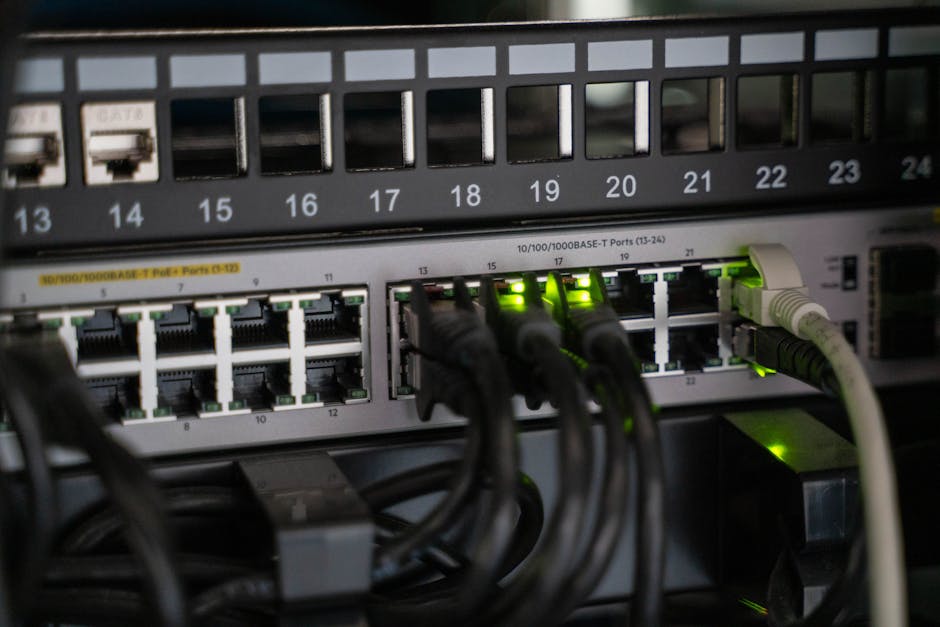
At the heart of every voice agent interaction is the telephony stack — the technology enabling bidirectional voice communication between the caller and the system. Managing duplex audio means the system can send and receive audio simultaneously. This capability is critical for natural conversations because:
- Users expect to be able to interrupt or "barge-in" while the system is speaking.
- The agent needs to listen continuously to distinguish between system speech and user interruptions.
- Timely detection of speaker overlap impacts downstream ASR accuracy and turn-taking management.
However, standard telephony infrastructure such as PSTN or VoIP introduces latency and jitter, affecting real-time duplex handling. High-quality telephony stacks must preserve audio stream integrity and offer APIs for precise audio control to allow the AI to react promptly.
Speech Recognition (ASR) and Overlapping Speech
Advanced ASR engines are essential to processing the caller’s speech amid overlapping system prompts. There are several technical challenges in this space:
- Separating Speaker Audio: The system must isolate user speech from its own playback audio, often requiring echo cancellation. Without it, the ASR confuses self-generated speech with user inputs, causing recognition failures.
- Overlap Resolution: When the user talks over the agent, the ASR needs to decide which words are user input and which belong to the system’s speech.
- Partial Recognition and Hypothesis Updating: In barge-in scenarios, ASR models often process partial speech hypotheses and may need to update or revise these based on new audio—something legacy engines could not efficiently handle.
Modern ASR models incorporate deep learning and acoustic modeling trained on overlapping speech datasets to improve recognition in these complex scenarios.
End-to-End Latency: The Silent Killer of Natural Interactions
One of my pet peeves in evaluating AI voice systems is when vendors focus solely on the model’s raw inference latency—ignoring the entire chain of delays from mic capture to audio playback. However, end-to-end latency is the critical metric that impacts user experience in barge-in and overlap handling.
End-to-end latency includes:
- Audio capture buffering delay
- Network transmission latency through telephony and cloud infrastructure
- ASR processing time (acoustic and language modeling)
- Natural Language Understanding and dialog manager processing delays
- Audio synthesis and playback pipeline latency
If this combined total latency exceeds ~200-300ms, users experience “talking over” issues: the system may start speaking when a user is beginning a sentence, or responses may feel customer satisfaction score calls unnaturally slow, forcing users to speak multiple times. Low latency is not optional; it is a prerequisite for effective barge-in and natural dialogues.

Barge-In and Interruption Handling: Techniques and Failure Modes
Barge-in is when a user interrupts the system prompt to take control of the conversation. Handling this requires sophisticated detection and smooth system adaptation without forcing users to repeat or confirm information. Key techniques include:
1. Continuous Monitoring and Endpointing
The system continuously listens while speaking to detect early user speech onset. Endpointing algorithms decide when the user has started talking and when they have paused, distinguishing between intentional interruption and background noise.
2. Prompt Truncation and Graceful Turn Transfer
Upon detecting barge-in, the system quickly truncates the remaining prompt playback and switches to listening mode to capture user input without delay. Ensuring this happens seamlessly prevents awkward silences or cut-offs.
3. Echo Cancellation and Audio Masking
Technical echo cancellation suppresses the system’s playback from being picked up by the mic, improving ASR accuracy. Additionally, audio masking filters can help the agent focus on overlapped user speech.
4. Dialog State Management
The system’s dialog manager must update context dynamically — for instance, if a user interrupts a prompt with a “stop” or “yes,” the agent should not wait for the prompt to finish but act immediately. This responsiveness avoids frustrating the user with redundant questions or forced repetitions.
Common Failure Modes to Test in Pilots
- Detecting false positives: The agent mistakenly assumes user interruption when none occurred, cutting off critical system prompts prematurely.
- Missed barge-in events: The system fails to hear or process interruption, making users feel ignored or stuck.
- Latency-induced overlap: System responses arriving too late that overlap with new user input causing recognition confusion.
- Forced repetition after hand-offs: When escalation to a live agent occurs, the system should transfer gathered context to avoid having customers repeat themselves, a common failure point.
Summary: What Makes AI Voice Agents Effective at Handling Overlapping Speech?
Key Area Challenges Effective Solutions Telephony Stack Maintaining high-quality duplex audio with minimal jitter and latency Use telephony platforms optimized for real-time audio, ensuring echo suppression and reliable audio stream APIs ASR and Speech Recognition Separating overlapped speech, handling echo, recognizing partial inputs Deploy advanced ASR with echo cancellation and training on overlapping speech datasets Latency Management Cumulative delays causing unnatural turn-taking and recognition errors Optimize end-to-end processing pipeline to keep latency under ~300ms Barge-In Handling Detecting interruptions reliably and adapting dialog flow smoothly Continuous listening, prompt truncation, dynamic dialog management, and thorough pilot testing for failure modesFinal Thoughts
There’s no magic bullet for overlap resolution and barge-in handling in AI voice agents. Success comes from engineering synergy: robust telephony stacks enabling true duplex streaming, cutting-edge ASR tuned for noisy and overlapping inputs, and low-latency end-to-end systems designed to respect natural human conversational rhythms. Teams considering AI voice deployments should insist on detailed latency metrics (beyond raw model response times) and live pilot tests covering known failure modes.
Above all, the goal is to create voice experiences where users feel heard and understood—even when they talk over the system—and where conversations flow naturally rather than staying trapped in the rigid turn-taking of legacy IVR. Only then will AI voice agents truly evolve from scripted tools to reliable conversation partners.